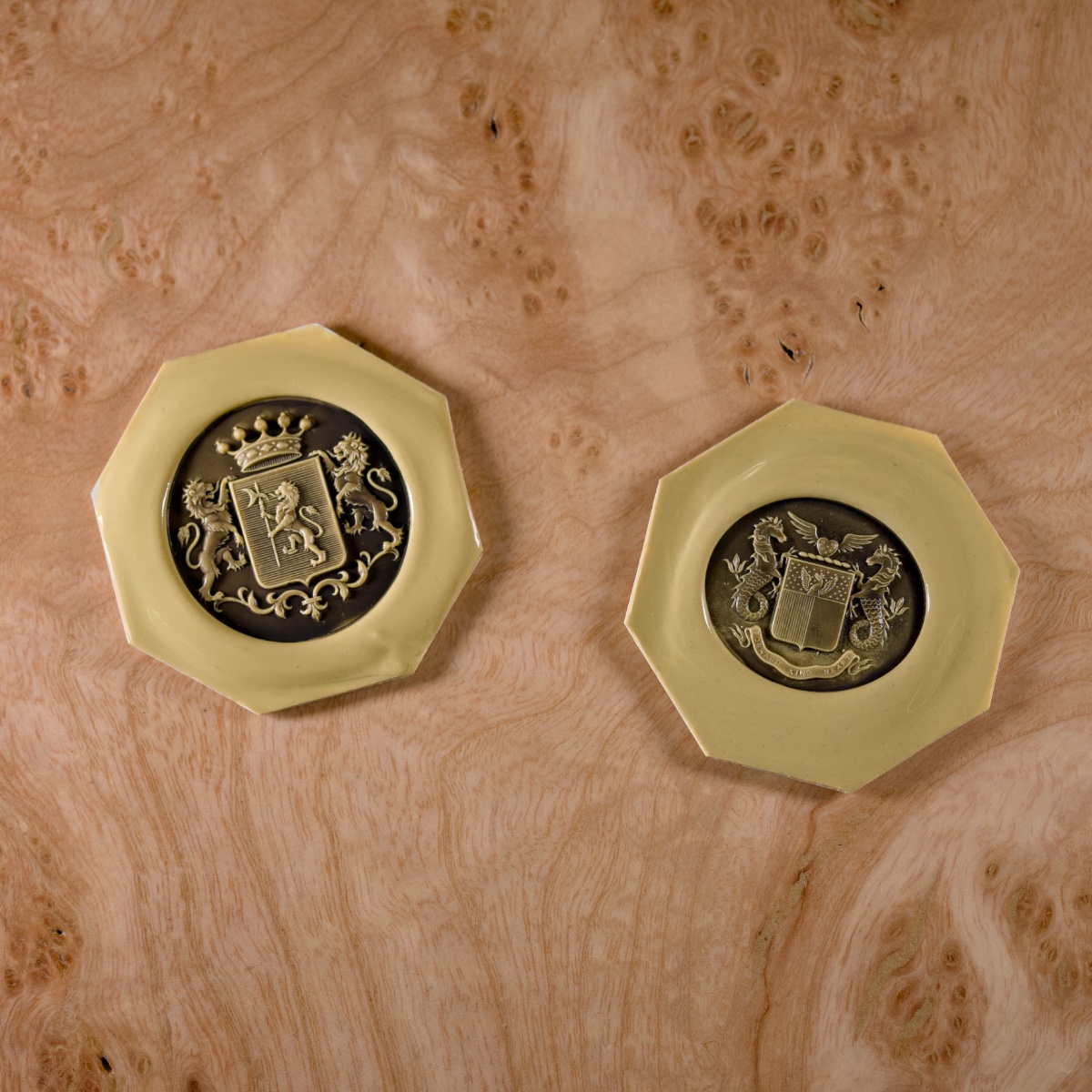

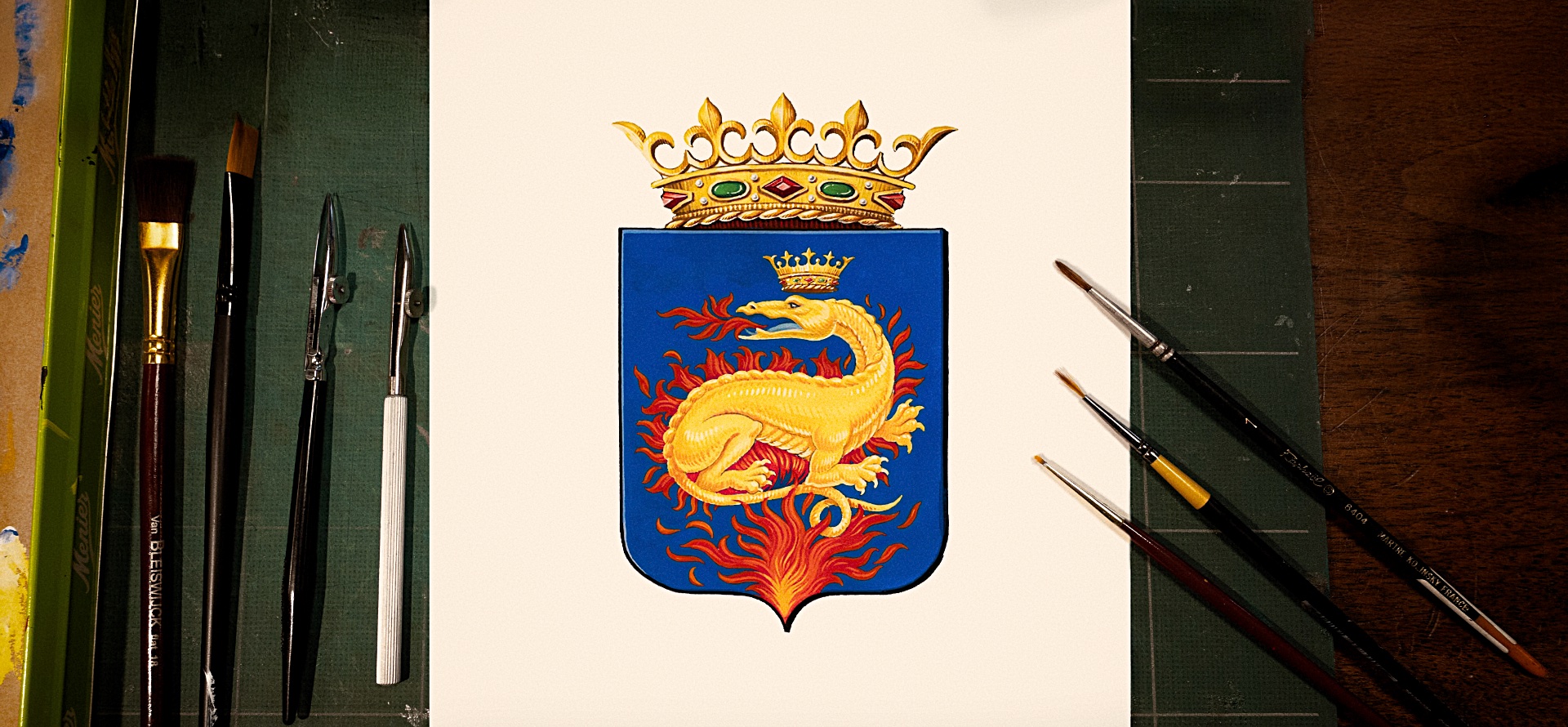
Heraldry is both a science and an art
That of designing, describing and studying coats of arms, also known as “arms”. Its name derives from the term “herald”, a public officer in the Middle Ages responsible for announcing knights at tournaments, proclaiming events and making declarations of war. A true messenger and guarantor of the rules, the herald played a central role in medieval society.
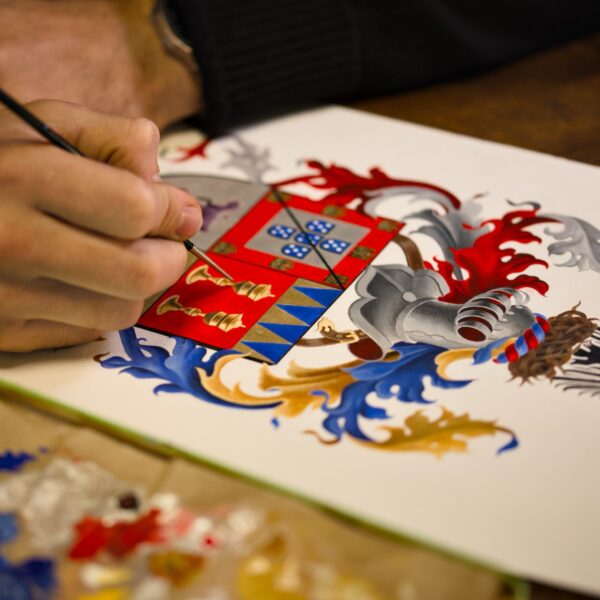
From chivalric origins to social practice
Born in the XIIᵉ century, heraldry first developed within European chivalry. Shields (shields) and tabards (tunics worn over armour), adorned with distinctive motifs, were used to identify combatants on the battlefield or during tournaments. This practice quickly spread throughout Western society, combining genealogy and prestige: each knight’s family, then each noble lineage, adopted its own coat of arms.
Simplicity and effectiveness of the first crests
The oldest coats of arms are characterised by their simplicity. At a time when few families had coats of arms, a few elements were enough to distinguish a family. The complexity of coats of arms increased over time, with alliances, inheritances and social distinctions.
Coat of arms: a language in its own right
The vocabulary of blazonry, derived from medieval Franco-Norman, has had a lasting impact on heraldry, particularly in France and England. Blazon” refers to both the design of the coat of arms and the language used to describe it.
Blazoning”, the codified description of arms, follows strict rules and a precise order. For an engraver, it enables a coat of arms to be faithfully reconstructed from its written description, which always takes precedence over graphic representations, which are sometimes clumsy and open to interpretation.
The diversity of ecus
The shape of the shield is free and often reflects local traditions or eras. A distinction is made between the “ancient shield” or “straight shield”, typical of Western Europe, and the “shaped shield” of Eastern Europe or the “Spanish shield” of the Iberian Peninsula.
EXAMPLES OF ESCUTCHEONS
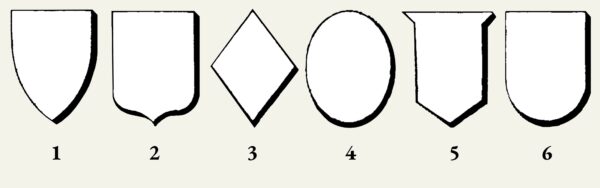
3 Diamond shield 4 Oval shield
5 English shield 6 Spanish shield
A universal identification system
Heraldry offered a coherent system of identification, not only for individuals, but also for lineages (coats of arms being passed down through inheritance) and communities (nobles, burghers, clerics, brotherhoods, towns, villages, etc.). At a time when the written word was rare, coats of arms made it possible to recognise and legitimise a person or group at a glance.
Seals and signet rings
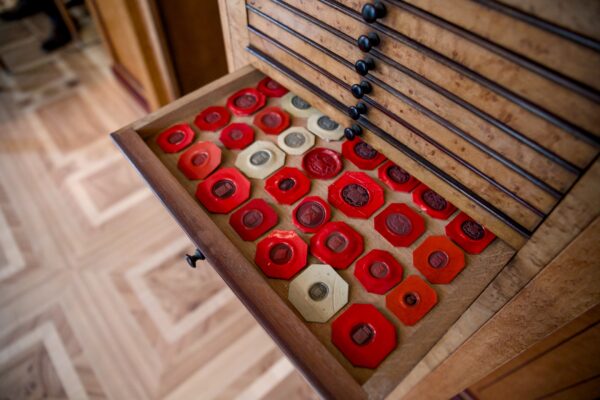
Everyday heraldry By extension, wax seals and signet rings became the preferred media for coats of arms, serving to authenticate official correspondence and documents between states, communities, clerics and nobles. These objects, both practical and symbolic, helped to anchor heraldry in the everyday life of medieval society.